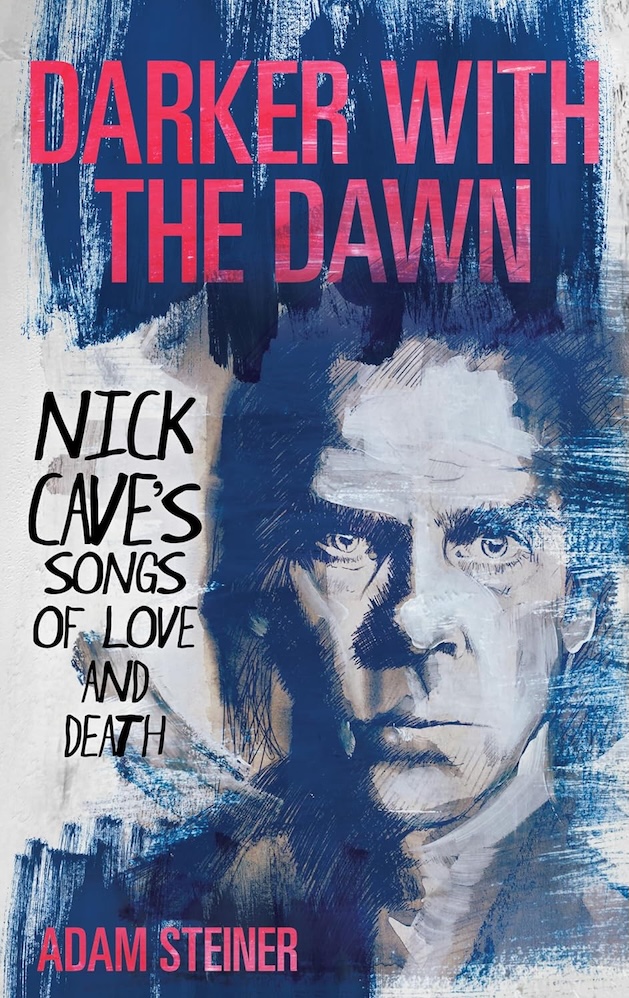
Nick Cave‘s journey from vampiric drug-addled iconoclast to something akin to national treasure in both his native Australia and adopted home of Britain is as remarkable as it is unlikely.
An uncompromising force of nature, his ability to deliver work of consistently high calibre over a 40-year-plus career makes him an artist worthy of serious analysis.
Such talents are rare not just in rock music, but in the arts in general and often comes hand in hand with a self-destructive bent.
While the young Cave teetered on the edge of oblivion, his survival and continued critical appreciation is a testament to his powers of re-invention and genuine, some might say obsessive, devotion to his craft.
But, no man is an island and even the Nick Caves of this world do not spring fully formed onto an unsuspecting public and that’s where Adam Steiner comes in.
Over the course of 250 meticulously researched pages in Darker With The Dawn, Steiner unravels the formative influences, controversies, collaborations, and creative inspirations that shaped the man and his ‘Songs of Love and Death‘.
Told over three sections – Dusk, Midnight and Dawn – Steiner’s book follows the singer-songwriter’s origins in Wangaratta through to his emergence onto the Melbourne post-punk scene with The Birthday Party and travels to London, Berlin, Sao Paulo and Brighton.
Structured thematically, Steiner’s work explores Cave’s career through the key songs that form the spine of his back catalogue.
We’re talking Tupelo, Deanna, From Her To Eternity, The Mercy Seat, Into My Arms, Push The Sky Away, Red Right Hand and more.
From these defining compositions he branches off to examine the veins, bones, blood – there’s a lot of blood – and connective tissue that make up his extraordinary body of work.
Religion looms large of course, along with Elvis as both artist and myth in the mind of the songwriter – the ultimate rock-n-roll messiah.
Like Presley, Steiner shows how Cave was drawn to Black music – paricularly spirituals and The Blues.
Cave would mine The Blues for both its rhythm and melancholy – drawing from artists like John Lee Hooker, Robert Johnson, Sonny Boy Williamson and Blind Lemon Jefferson.
This would leave the white middle class Antipodean prone to accusations of cultural appropriation, one of many charges that would dog the functioning addict over the opening phase of his career.
Steiner outlines how Cave’s preoccupation with death and misery opened him up to censure for misanthropy.
Worse still his graphic depictions of murder and extreme violence towards women would lead some to label him a misogynist.
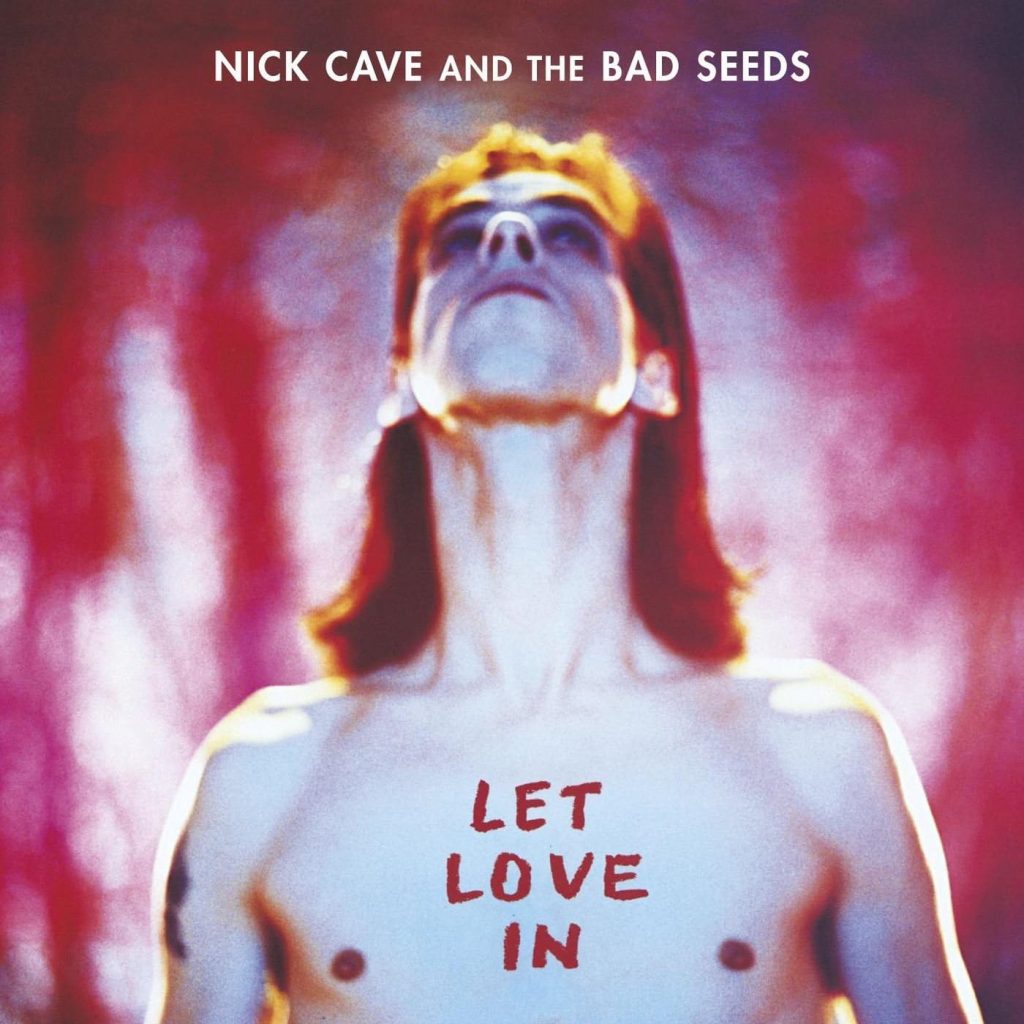
His defence that his male characters often come off just as badly, or worse, than his female protagonists does not entirely convince.
Steiner notes that Cave, at least initially, embraced and even cultivated his bad boy image, tapping into the outlaw, larrikin spirit of Ned Kelly.
The tall, thin, spidery figure howling and screaming at the front of the cadaverous Birthday Party would continue to push boundaries after forming The Bad Seeds.
Providing an antidote, he would argue, to soulless bland art.
Certainly his motley cast of twisted ne’er do wells – Stagger Lee and the nameless killer, who stalks O’Malleys Bar among them – are not the types you’d bring home to mother.
But behind the shock value and pulp novel characterisations, the young Cave does have profound things to say about love, faith and man’s struggle against a vengeful god and cruel unforgiving world.
That’s to say nothing of the sheer audacity and vitality of the music, its fierce intelligence and refusal to bow to the prevailing trends of the day.
Cave and his changing roster of Bad Seeds hold up a black mirror to the world, reflected through the lens of his damaged, deficient, malformed and occasionally brutal creations.
Steiner sums it up well in his assessment of another seminal early period work, The Carny.
“Finding imperfect beauty in the fucked up, the flawed and the freak would inspire Cave in his musical efforts to bring the circus to town and make it his creative home.”
As his songwriting matures, according to Steiner, Cave’s tone shifts around the time of the lovelorn Boatman’s Call album, from the tooth and claw of the Old Testament to signs of something lighter more hopeful and expansive in the New.
While tragedy – most affectingly the death of his son Arthur – continues to bleed into his work, Cave widens his palette, battling cynicism with an insatiable curiosity about the world and our place within it.
“Cave’s recent lyrics have become more fragmented and impressionistic reflecting an increasingly complex view of the world.“
Throughout his career, this book shows, that Cave is not only a prolific contributor to culture, but also a voracious consumer of it.
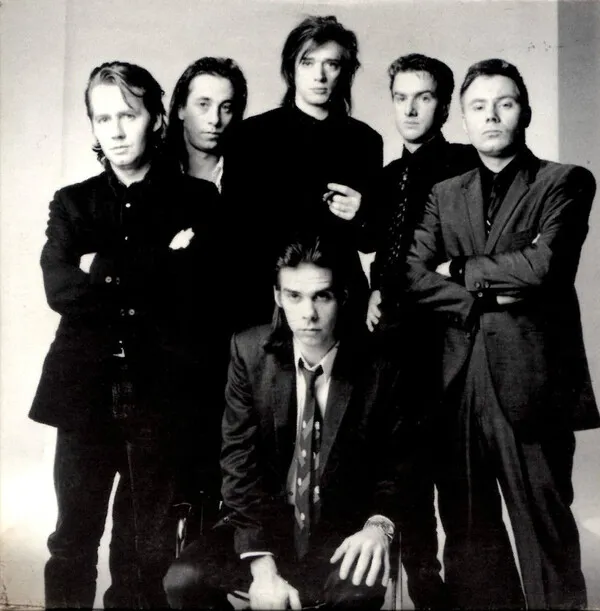
He devours books, works of art, architecture and film and then expurgates what he’s learned through the filter of his own wild, surreal and captivating imagination.
Never shy of overreaching, Steiner unveils the broad sweep of Cave’s ambition – his attempts to portray the full compass of human experience.
“Cave’s songs merge the cycle of love, death and birth into a single pulse, a relentless, unstoppable wave.”
Steiner’s scholarly, but engagingly written, tome provides a vivid insight into a performer skilled in creating and fomenting his own mystique.
It shows how he develops from a contemptuous, junkyard poet, railing and sneering at the world, to a cleaned up, respected – if not entirely respectable – musician and man of letters.
It’s a book for those of us who enjoy mulling over printed lyrics on albums and finding out the guiding lights and influences that formed our most treasured artists.
If you want to know what Cave got from the poetry of Larkin and Donne, or the novels of Flannery O’Connor, Cormac McCarthy and Michael Ondaatje – then this is the book for you.
- Darker With The Dawn – Nick Cave’s Songs of Love and Death is released as paperback 16 April and is also available in audiobook format through Bloomsbury
- More about Adam Steiner’s writing and other projects available here
- Nick Cave’s official website here